October 31, 2026


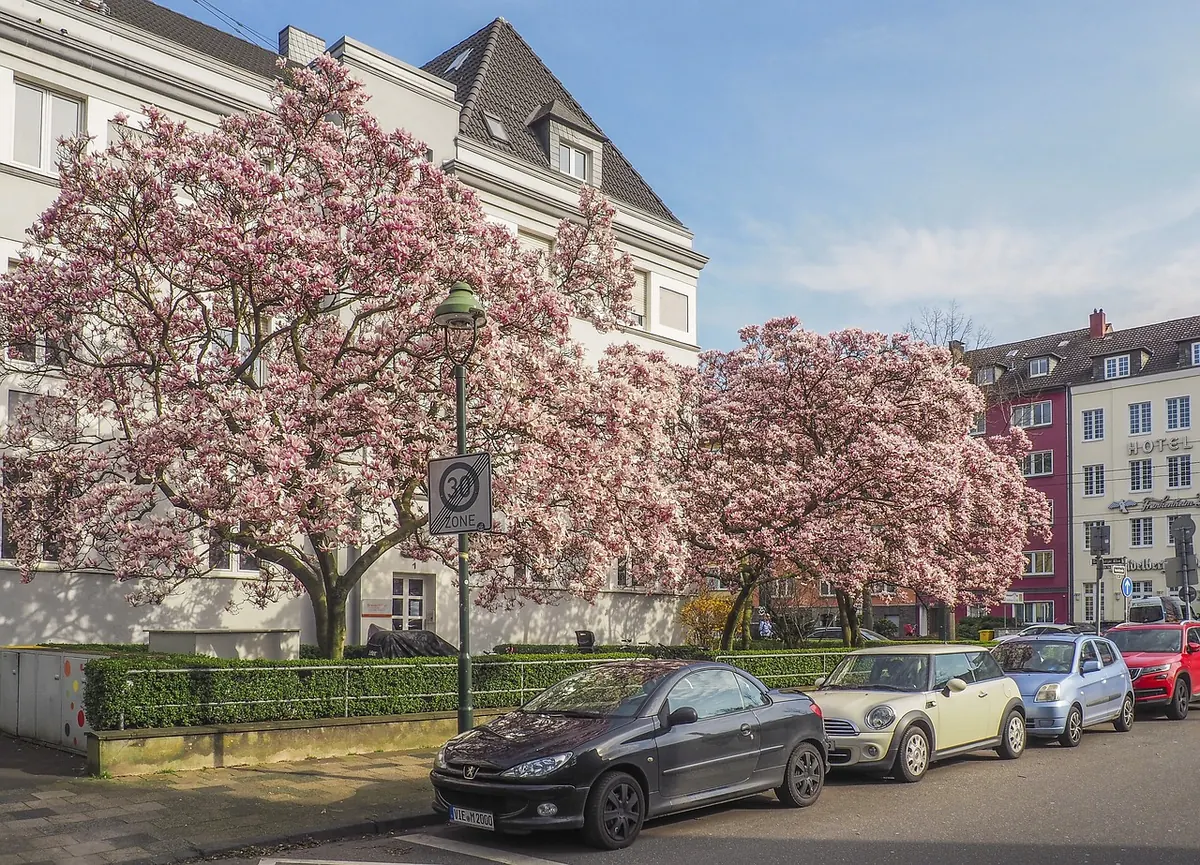
There is a square of ground outside almost every building that could hold a tree. Sometimes it is a proper pit with a metal grate; sometimes it is a strip of gravel between the wall and the kerb. Planting there is one of the most useful things you can do for a street — July shade, birds, a little less heat coming off the asphalt at night. It is also a decision that will outlive the person making it. Before you buy a sapling, spend an afternoon on the things that decide whether it survives.
Start with the opening, not the catalogue. Measure the length and width of the pit at ground level, then the depth of loose soil you can reach before you hit rubble, builders' waste or a concrete slab. A pit the size of a doormat will take a small ornamental tree. It will not take a plane, an oak or anything else with a canopy that spreads ten metres.
Then look up. Note balconies, awnings, shop signs, overhead cables, streetlights and window lines. A tree that is three metres tall in five years may be eight metres across in fifteen, and the pit alone tells you nothing about that. Branches that brush a bedroom window or lean into a cable become someone's problem long after the planting is forgotten.
Check the light while you are there. Which way does the pit face, and how many hours of direct summer sun does it actually get? A shaded courtyard needs a different list of species from a south-facing kerb that bakes from morning to evening.
Street soil is rarely soil. It is subsoil, compacted grit, old brick, sand from winter gritting and whatever the builders left behind. That matters more than the tree you choose.
Take a handful from about 20 cm down, dampen it and squeeze it in your fist. If it holds a shiny ball that feels like plasticine, there is a lot of clay: it will hold water and roots will struggle for air. If it crumbles at once, it is sandy and will dry out fast. A jar test — soil and water shaken in a clear jar and left to settle overnight — gives you a rough idea of how much sand, silt and clay you are working with.
Dig a hole around 30 cm deep and 30 cm wide. Fill it with water, let it drain, then fill it again and time how long the second lot takes to disappear. Water that is still there in the morning means the pit behaves like a bucket in wet weather, and roots drown in that. Your options are planting on a slight mound of better soil, choosing a species that tolerates wet feet, or improving the drainage properly.
If the test hole is still full the next day, that is the cheapest warning you will ever get.
Gas, water, electricity, phone and fibre lines run under streets, often shallower than you would guess. Hitting one is expensive and occasionally dangerous. Ask your local utility locating service about cable positions, and never dig blind close to a wall or a pavement joint. Keep a sensible distance from foundations too; a young tree planted tight against a wall becomes an awkward conversation in twenty years.
Ownership matters as much as pipes. In many Italian towns the strip between the building line and the road belongs to the municipality, even if nobody has planted anything there for decades. A courtyard shared by several flats is usually condominium property, and planting in it generally needs the assembly's agreement. Private gardens are a different case again. Rules vary from place to place, so check with the local office responsible for green spaces or public roads before you buy anything, and keep the reply in writing. If the legal side of a shared courtyard feels murky, a short conversation with a local professional is worth more than a guess.
Have these ready when you ask:
A newly planted tree needs steady water for two or three growing seasons, and street trees rarely get rain when they need it. Work out the practical route before planting: where is the nearest tap, how far is it, and can a hose reach without crossing a neighbour's doorway or a busy pavement? If not, how will you carry twenty litres at a time, and how often?
More importantly, decide who does it in August, when the people who planted the tree are on holiday. A tree ringed by paving dries out faster than one in open ground, so mulch kept clear of the trunk, plus a watering bag or a slow-drip container, can buy you days between visits. Ten litres twice a week during a dry spell does more than one flood a month.
The right tree is usually the boring answer: a species that suits your soil, light, space and rainfall, and is known to grow well nearby. Walk your street and the next two over and look at what is thriving in similar pits. Ask a local nursery what they sell most often to people with your conditions, and what they would avoid. Mature size, root behaviour, drought tolerance once established and sensitivity to local pests all matter more than a photograph.
Small and young generally beats large and instant. A bare-root or modest container-grown tree establishes faster than a big specimen whose roots spend years recovering from the move. Check that the roots are not spiralling tightly inside the pot, and that the trunk is sound.
A tree in a pit is not a wild thing, and someone has to remember it. Write the plan down and keep it where the whole building can see it.
Agree early what happens if the tree dies.
Photo: 阿叉 / Pixabay
Growing citrus and green life along the streets.
Copyright © 2026 Arancio Della Strada. All rights reserved. Arancio Della Strada.