October 31, 2026


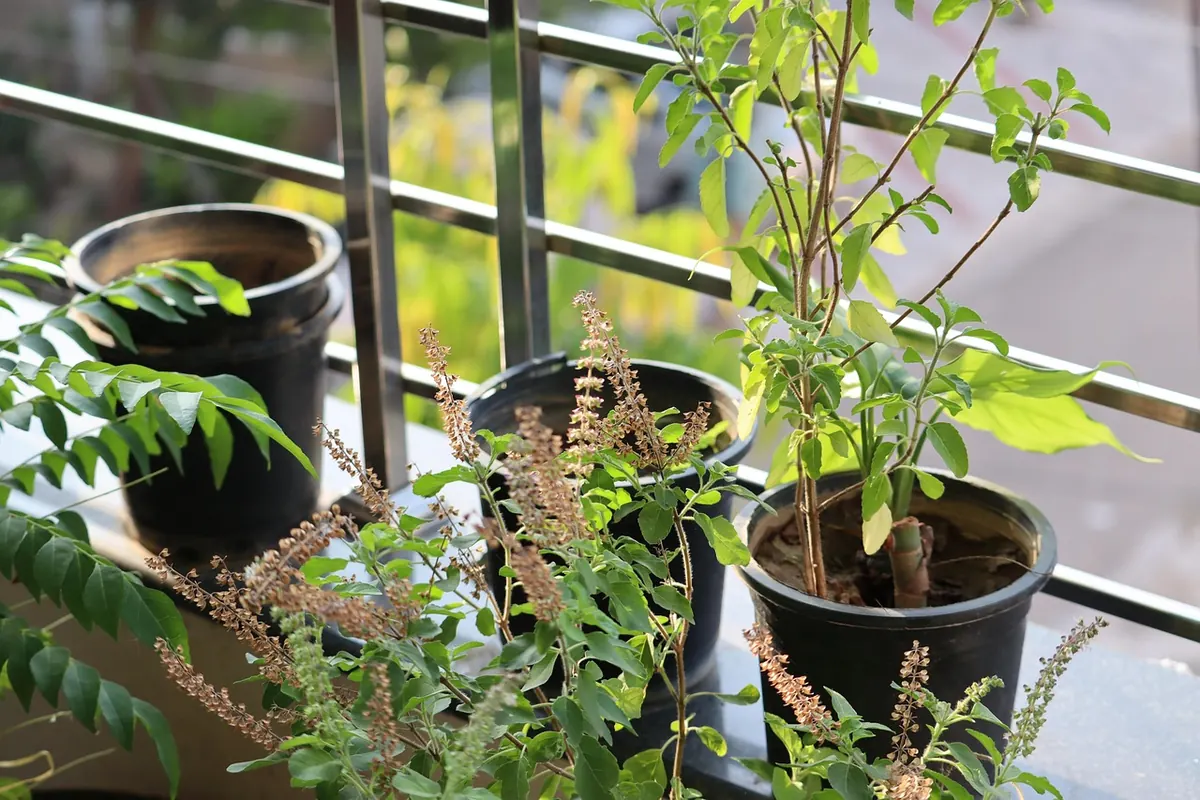
A basil that goes limp by Wednesday. Rosemary turning grey at the tips. Mint that romps through June and has vanished by August. If you have killed a few herbs on a balcony, you are in excellent company, and it is almost certainly not bad luck. Container herbs fail for a short list of predictable reasons, most of which you can see with your own eyes and correct this weekend.
What follows is the diagnosis order I use when a pot starts looking sorry for itself: light first, then water, then the pot itself, then the wind. Work down the list and you will usually find the culprit within two or three steps.
Balconies are strange little microclimates. A corner that feels gloriously bright — white walls, pale tiles, a nice view — can be genuinely dim from a leaf's point of view, especially under an overhang or behind a railing. Mediterranean herbs want sun landing directly on their foliage, not just daylight in the general area. Four to six hours of direct sun is the working minimum for basil, rosemary, thyme, sage and oregano; basil and rosemary will happily take more.
The classic failure looks like this. You buy a bushy herb from a sunny nursery, carry it home, and park it on a north-facing balcony or in the shade of the building. It goes pale, throws out long weak stems and stops producing leaves worth eating. You assume it needs more attention, water it more generously, and it quietly rots.
Before you buy anything else, spend one day noting where the sun actually falls. Check at ten, at one and at four. Sunlight moves across a balcony through the season, and shifting a pot half a metre along the wall can change everything. If your space really is shaded, stop fighting it: mint, parsley, chives and chervil cope with part shade, and they will do far better than a sulking rosemary ever will.
Most herb deaths are drownings with a side order of drought. Watering a little every morning feels diligent and is usually the worst thing you can do. The top of the compost stays damp, the roots below sit in saturated soil, oxygen runs out and they begin to rot. The plant wilts, which looks exactly like thirst, so you water again.
Two checks replace the calendar. First, push a finger into the compost up to the second knuckle: if it is dry down there, water. Second, lift the pot. A well-watered pot is noticeably heavy; a dry one is startlingly light. After a fortnight you will be able to judge by weight alone, which takes about two seconds.
When you do water, water properly — enough that it runs out of the base — then leave the plant alone until the top couple of centimetres have dried out. In July on a sunny balcony that might mean daily for a small basil pot and every third day for a deep rosemary. In October, once a week may be plenty. Terracotta dries faster than glazed ceramic or plastic, which is a virtue in wet weather and a nuisance in a heatwave.
A pot without holes is a bucket. Water collects at the bottom, roots suffocate, and no amount of careful watering will save them. Decorative outer pots are the usual trap: the inner nursery pot drains beautifully into a sealed container that then holds an inch of stagnant water.
Fix it properly. Every pot needs drainage holes, and every pot needs feet, crocks or a slightly raised base so water can actually escape. If you use a saucer for looks, empty it fifteen minutes after watering. And when you bring a supermarket herb home, do not leave it in the thin, root-packed nursery compost for months — pot it on into something with a bit more room and some grit mixed through.
An undersized pot is a daily emergency in summer: the compost dries out before lunch and the plant spends the afternoon in survival mode. An oversized pot is the opposite problem, holding a large volume of wet compost that a small rootball cannot drink down, which invites rot.
Match the pot to the plant with roughly two or three centimetres of extra room around the rootball. As a rough guide, give a single basil plant a pot around twenty centimetres across; rosemary and sage want depth more than width; thyme and oregano are happy in shallow bowls. Mint is the exception that proves every rule — it spreads aggressively, so give it its own container and keep it there.
Crowding is the other half of this. Those cheap, generous-looking pots of basil or parsley from the shop often hold six or eight seedlings jammed together. They compete for water and light, and the weakest go mouldy. Split them into separate pots, sacrificing the extras if you must, and the survivors will reward you within a fortnight.
Anything above the second floor gets more wind than the street below, and balconies channel it. Wind snaps stems, scorches leaf edges, dries the surface compost while the middle of the pot stays wet, and generally makes plants leathery and tired. It also topples pots, which is its own kind of heartbreak.
Put the tough ones at the exposed edge — rosemary, thyme, lavender, sage — and tuck the tender ones, basil, parsley, mint and chervil, behind them or against a wall. Group pots together so they shelter each other. A planter or a low screen along the railing does more for a basil crop than any fertiliser you can buy.
Once a week, walk the balcony with a mug of coffee and do a slow lap. Lift each pot to feel its weight. Pinch out the flower buds on basil to keep the leaves coming. Snip the top third of any stem that is getting long and leggy — you get free herbs and a bushier plant. Turn each pot a quarter turn so it grows evenly, and look at the undersides of a few leaves for aphids, which gather there before anywhere else.
Feed lightly in the growing season, roughly every two weeks at half the strength on the bottle. Overfeeding gives you soft, floppy, bland-tasting leaves, which is the opposite of the point. Then leave everything alone. Herbs on a balcony respond to attention, but they respond far better to the right light, the right watering and a pot that drains.
Photo: atulpathria / Pixabay
Growing citrus and green life along the streets.
Copyright © 2026 Arancio Della Strada. All rights reserved. Arancio Della Strada.