October 31, 2026


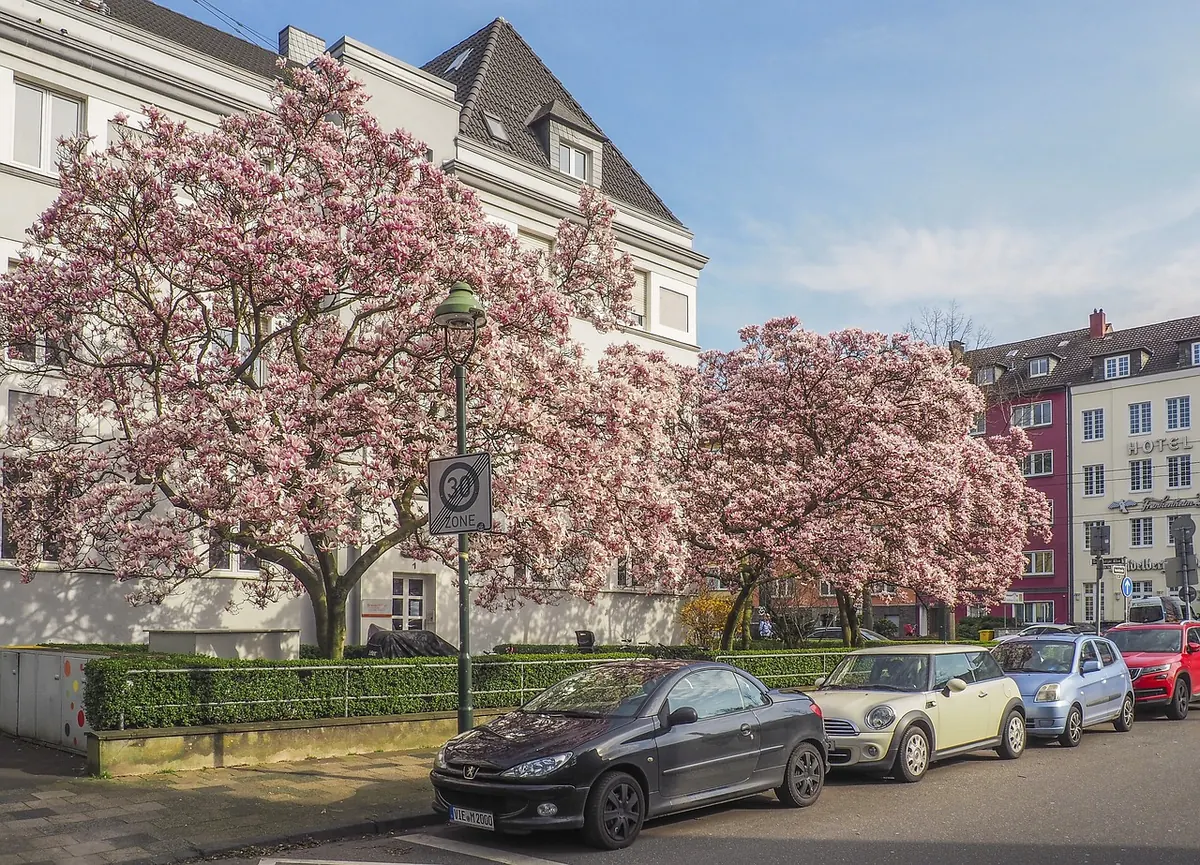
Walk down almost any city street in late July and you will see them: young trees with their first real canopy, standing in a square of bare soil the size of a doormat, ringed by asphalt that has been holding heat since nine in the morning. Most were planted in the last two or three years. Most are entirely dependent on someone noticing them.
A heatwave is when that dependence starts to matter. A mature plane or lime can pull water from deep soil and ride out a fortnight of hot weather with little visible damage. A tree with a trunk the width of your wrist cannot. It has a small root ball, still roughly the shape of the pot it grew in, and a limited reserve of water to draw on. What follows is a practical guide to getting those trees through the hot weeks: how to water, how to mulch, and how to read the leaves before a problem becomes permanent.
The root system of a nursery-grown tree is a fraction of what it will eventually become. For the first two or three summers after planting, nearly all of its roots sit within a metre or so of the trunk, in whatever soil was put back into the pit. That small volume dries out quickly, and once it does, the tree has nothing else to fall back on.
The street makes everything harder. Tarmac and paving soak up heat through the day and release it slowly at night, so the tree never gets the cool hours it would get in a garden. Pale walls and south-facing facades throw light and heat back onto the canopy from a second direction. Tree pits are small, often compacted, sometimes sealed, and the soil in them is a long way from the deep, cool, crumbly stuff a tree would choose.
Species matters too. A young birch, rowan or ornamental cherry may show stress after only a few days of hot, dry weather, while a young oak or hornbeam with a slightly more generous root ball can hold on a little longer. But no newly planted street tree is truly drought-proof. The difference is only in how quickly the first symptoms appear.
Under that pressure, a tree loses water through its leaves faster than its roots can replace it. Everything below is about tipping that balance back in its favour.
Almost every watering mistake with young trees comes from doing it little and often. A quick sprinkle with a can each evening wets the top centimetre of soil, evaporates before it reaches a root, and encourages roots to stay near the surface, which is exactly where the soil is hottest and driest. What a street tree needs is fewer, deeper soakings.
As a rough guide, a young tree in its first two or three summers wants something in the region of 20 to 30 litres at a time — several full watering cans — once a week in ordinary warm weather and twice a week during a heatwave. A small tree needs less; a tree in a generous open bed holds moisture longer. The calendar matters less than the soil: push a finger or a thin screwdriver into the pit, and water when it is dry more than a couple of centimetres down.
Do not be fooled by a shower of rain. A brief summer downpour may darken the pavement and cool the leaves without putting any useful water into the root ball. If less than about a centimetre has fallen, assume the tree is still thirsty. A rain gauge is useful, but a simple check with your hand is usually enough.
Pour slowly and in one place so the water soaks in rather than running off. Dry soil can turn water-repellent; if the water beads and streams away, stop, let it settle, then start again. Aim for the root ball and the ground out towards the edge of the canopy, not the trunk itself, where constant wet can damage the bark.
Evening is the best time in a heatwave, early morning the next best. Midday watering loses a surprising share to evaporation before it ever reaches a root. If the tree pit has a plastic watering tube beside the trunk, use it — that is what it is there for. Trunk-wrapping and guards should be checked at the same time: a guard that has become tight or a wrap that is trapping damp against the bark can do more harm than good, and both can hide the first signs of damage.
Where several trees stand in a row, a watering can and a slow, steady routine will beat a hose left running at full pressure. Water one tree properly, then move to the next. It is better to give half the trees a thorough soaking than all of them a token splash.
If watering is the main job, mulching is the close second. A layer of organic mulch — bark chippings, leaf mould, well-rotted compost or similar — slows evaporation from the soil surface, keeps the root zone cooler and suppresses weeds that would otherwise compete for the little water there is. In a street pit, it also softens the visual hardness of the setting and signals that the tree is cared for.
Apply a layer about five to eight centimetres deep over the bare soil, spreading it out to the edge of the canopy if the pit allows. Keep it clear of the trunk itself: a mulch volcano piled against the bark holds moisture where it should not and can encourage rot. Think of a doughnut, not a mound. If the tree pit is sealed or covered, do not try to bury the surface; work with what is there and concentrate on watering instead.
Mulch is not a substitute for water, and it will not rescue a tree that is already badly drought-stressed. But it buys time between waterings, and during a heatwave time is exactly what a young tree needs.
A young tree usually tells you it is in trouble before it dies. The first signs of heat and drought stress are often subtle: leaves that look dull rather than glossy, a slight grey-green cast, or a canopy that seems to droop in the afternoon and recover overnight. That daily wilt is a warning, not yet a disaster.
More serious signs include leaves curling at the edges, turning brown and crispy from the tip inwards, or dropping early. Some species, such as young birches, may shed inner leaves first as a survival strategy. Others will show scorched patches on the side facing a hot wall or pavement. Check both the top and the underside of the leaves, and look at the growing tips: a tree that has stopped producing new growth in midsummer is conserving what it has.
Do not wait for a tree to look dead before you water it. By the time the leaves are brown and crisp, the damage may already be done.
It is also worth distinguishing drought stress from other problems. Leaves that are yellow all over may indicate waterlogging or poor drainage, not drought. A tree that wilts even when the soil is damp may have damaged roots or a problem below ground. If in doubt, check the soil before reaching for the watering can.
Not everyone has a garden tap beside the tree pit. If you are watering a street tree, a few practical habits make the job easier. A lightweight folding container or a couple of large bottles carried in a bag can be refilled at home; a short length of hose attached to an outdoor tap can save repeated trips. If several neighbours share an interest in the same row of trees, a simple rota can keep the watering going through the hottest fortnight without one person carrying the whole job.
Trees on public land are usually the responsibility of the local authority, but that does not mean residents cannot help. Many councils welcome responsible watering of young street trees during drought, provided it is done carefully and without damaging the pit. If a tree is newly planted, check whether it came with a watering tube or a maintenance schedule. If it is clearly struggling, report it rather than trying to fix structural problems yourself.
Finally, think beyond the heatwave. A tree that survives July on a deep soaking and a good mulch is in a stronger position for the rest of the year. The habits that get young street trees through a hot summer — checking the soil, watering thoroughly, keeping the root zone covered — are the same habits that help them establish for good. A little attention now can turn a vulnerable sapling into the kind of tree that, in twenty years, will shade the whole street without anyone needing to notice it at all.
Photo: ruzickap / Pixabay
Growing citrus and green life along the streets.
Copyright © 2026 Arancio Della Strada. All rights reserved. Arancio Della Strada.